

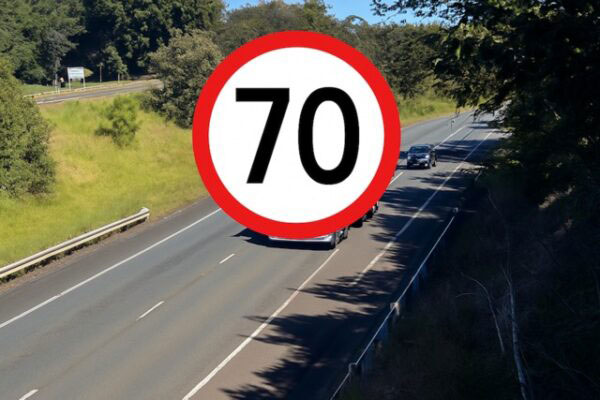
Slowing Down the Bush: Anger at Plan to Cut Rural Road Speed Limits
Federal Page MP Kevin Hogan says regional communities are “outraged” by a proposal to reduce default speed limits on country roads to 70 km/h — a move he says is part of Labor’s push to meet “reckless” climate targets.
“We obviously drive to the conditions anyway,” Mr Hogan told Ballina News Daily. “But to restrict us to 70 kilometres an hour on roads that are currently 100 — because they think it helps their emissions targets — is outrageous.
They should be fixing our roads and making them safer, not slowing people down.”
The idea appears in a Regulatory Impact Statement examining national road-safety settings. The document argues slower travel reduces fuel use and, in turn, greenhouse-gas emissions.
Mr Hogan said the measure would amount to a 30 per cent productivity cut for “every farmer, truckie, tradie and small business that depends on these roads,” bringing longer commutes and higher fuel costs for regional families.
“If you’ve got a 50-kilometre drive to work, or you’re rushing to hospital in an emergency, they want you slowed to 70 kilometres an hour,” he said. “They don’t get regional Australia.
We’re not stupid — we already slow down where it’s unsafe — but this is unfair to country people.”
He also accused Labor of cutting funding for regional road programs such as the Local Roads and Community Infrastructure fund, saying “their solution is to make us live their lifestyle.”
Liberals weigh response to Nationals’ ‘Net Zero rethink’
The renewed focus on rural speed limits comes as the Liberal Party prepares to meet in the week ahead to decide whether to follow the Nationals in taking a more moderate line on Australia’s path to Net Zero.
Mr Hogan said he was hopeful the Liberals would adopt a “considered, common-sense” approach that reflects everyday concerns about cost of living and energy reliability.
“We want to give them space and time to make their decision,” he said. “I’m optimistic they’ll come to a sensible position, and we’ll always look to negotiate in good faith.”
He said the Nationals’ “Cheaper, Better, Fairer Energy” plan was developed over six months and had unanimous party-room support.
“Our plan cuts emissions in line with comparable OECD nations, not ahead of them,” Mr Hogan said. “Labor’s 65 per cent target by 2035 will make energy unaffordable and drive more industries offshore. We can’t keep losing smelters and processing industries because they can’t get reliable energy.”
Mr Hogan said the Nationals’ stance could appeal to mainstream voters who are increasingly sceptical of ambitious but costly climate goals.
“This is a debate we can win with the middle ground if we start explaining it now,” he said. “We take principled stands, and we’ve done the work on this — just as we did with the Voice referendum.”