

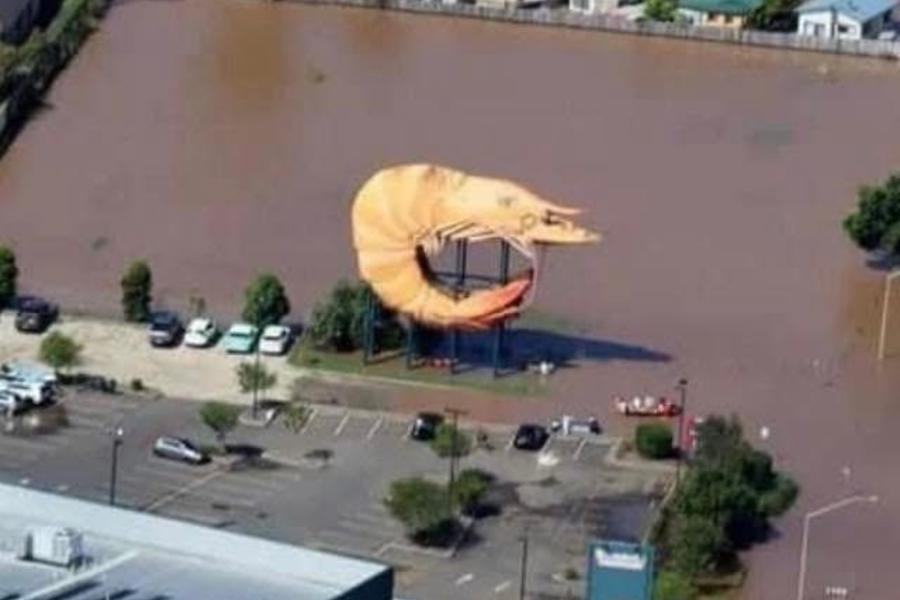
Landmark report reveals true cost of fires, floods and Cyclone Alfred
Business insurance premiums almost double as Northern Rivers economy absorbs $4 billion hit
A new landmark report has laid bare the enormous economic toll six years of natural disasters have had on the Northern Rivers — from the 2019–20 bushfires to the 2022 floods and ex-Tropical Cyclone Alfred in 2025.
Released today by the NSW Reconstruction Authority and produced by Deloitte Access Economics, the Northern Rivers Economic Profile and Natural Hazard Impacts Report is the first study of its kind in Australia, jointly funded by the NSW and Federal Governments.
The analysis shows the region’s Gross Regional Product (GRP) suffered a cumulative $4 billion loss, representing nearly 3 percent of total economic activity that would otherwise have been generated since 2019.
The broader socio-economic damage totals $6.9 billion, including losses to businesses and households, reduced productivity, supply chain impacts, mental health impacts, and government recovery costs.
Despite this, the Northern Rivers economy still grew 17.9 percent between 2019 and 2024, reaching $22.8 billion — a sign that underlying economic strengths of our region.
That growth rate matches the rest of regional NSW, which has not endured the same concentration of natural disasters.

Insurance premiums soar
One of the most alarming findings relates to the escalating cost of insurance.
Average business insurance premiums in the Northern Rivers rose 94 percent between 2021 and 2024 — from $14,500 to $28,200. The steepest jump came immediately after the 2022 floods, with a 53 percent rise in a single year as insurers recalibrated risk.
Some businesses are now reducing coverage or going uninsured, citing affordability concerns.
Ongoing strain on local businesses
During consultations, many businesses reported:
- Telecommunications failures, especially during high-demand periods or when NBN infrastructure was compromised.
- Frequent power outages, often caused by vulnerable overhead lines, with some businesses reporting thousands of dollars in stock losses.
- Transport disruptions, particularly on the Pacific Highway, causing major delays to just-in-time supply chains.
- Severe housing shortages, pushing up rents and making it difficult to recruit and retain staff.
- Limited industrial land above the floodplain, constraining expansion options.
Many business owners said the cumulative impact of multiple disasters — combined with COVID-19 — had led to financial fatigue and emotional stress, leaving them with minimal buffers should another major event occur.
Pathway to resilience
The report will directly shape the Northern Rivers Disaster Adaptation Plan, guiding regional-scale decisions about risk reduction, infrastructure investment and long-term resilience.
NSW Reconstruction Authority Acting Head of Adaptation, Mitigation & Reconstruction, Kristie Clarke, said the findings provide the most accurate picture yet of the region’s economic vulnerability.
“We all know that economies take a hit every time disaster strikes. Now, for the first time, we have measured the true size of the hit to the Northern Rivers economy across three disasters.
“We need to collaborate, innovate and work together, across industries and businesses, to champion resilience, invest in adaptation and shape an economically strong and disaster-resilient Northern Rivers.
“Encouragingly, this report highlights that many businesses in the Northern Rivers are already taking the necessary steps towards that goal.”
The Authority says insights from local business owners and communities will be central to developing the region-wide adaptation plan.