
After tense debate, Council decides fate of Spoonbill Reserve
Share This Story, Choose Your Platform!
Ballina Shire councillors stood united for a minute’s silence on Thursday morning to honour the victims of the recent Marine Rescue tragedy.
It was a moving moment of unity before a council meeting that later shifted into more pointed political debate over housing, council finances and transparency.
Mayor Cr Sharon Cadwallader said the Ballina Bar tragedy had deeply affected the wider community, extending far beyond the families and volunteers directly involved.
“The loss has been felt in homes, in workplaces, volunteer organisations, and right across Ballina Shire and beyond,” she told the chamber before councillors stood in silence.
But after the solemn opening, attention later turned to the future of Spoonbill Reserve at Skennars Head, where councillors debated whether part of the site should potentially be investigated for housing.
Cr Phil Meehan unsuccessfully attempted to reopen discussion about using part of the reserve for housing development, arguing council had a responsibility to investigate whether some of the land could help ease future financial pressures and reduce reliance on special rate rises.
His amendment proposed retaining part of the reserve as enhanced open space while investigating the remainder for possible housing development.
Cr Meehan argued councillors had a duty to at least explore the option.
He claimed council could potentially realise millions of dollars through development while still retaining substantial open space.
“The figures that we could realise would be around $5.4 million,” he said.
Cr Meehan also argued residents in other parts of the shire had far less access to open space than residents at Skennars Head.
“Residents of West Ballina, as they drive along the coastline and look at the parkland … would think those people live in God’s country,” he said.
The proposal sparked a lengthy debate around housing, council finances, open space and political strategy ahead of the next NSW election.
Election candidate warning
Greens councillor Cr Kiri Dicker delivered some of the strongest comments of the morning, suggesting councillors contemplating state election campaigns could face backlash if they supported development of the reserve.
“What will happen if we try and pursue this is we are going to get this huge campaign against it,” Cr Dicker said.
“There’s already been flyers circulated around Skennars Head in opposition to this.
“It’s interesting, right, because we’re heading into a state election.
“So just say, for example, anyone in this council was thinking about possibly contesting that state election … what you’re going to end up with is a huge campaign against it.
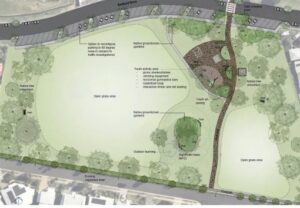
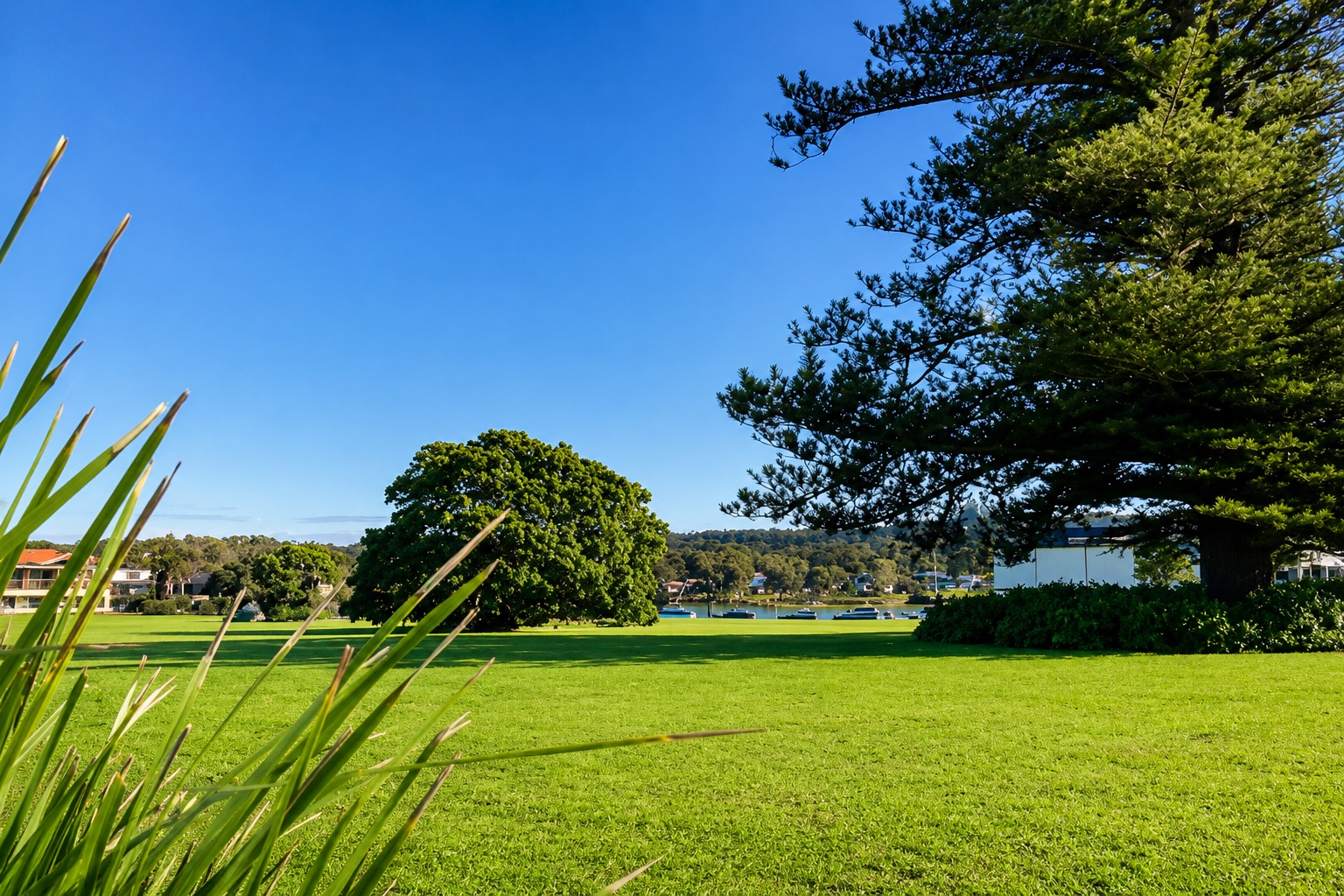
Images from council’s now adopted Spoonbill Reserve Master Plan, including (main photo) how it appears now and (above) how it could be laid out to make further improvements for recreation.
“Big voting population in Lennox Head.
“I know them very well.
“I will gladly take this opportunity and run with it if you want to give it to me.
“But just a warning — you’re leaving yourself wide open.”
The comments came amid ongoing speculation Mayor Sharon Cadwallader could consider an independent run for the Ballina seat, while Deputy Mayor Damian Loone has also been discussed as a possible Nationals contender.
Cr Dicker herself has also been mentioned as a possible Greens candidate, although high-profile Greens figures Mandy Nolan and Byron Mayor Sarah Ndiaye are the only declared contenders at this stage.
Cr Dicker argued the proposal would do little to solve housing affordability issues.
“It’s not going to do anything to provide housing for the people that actually need it.”
She also challenged claims the proposal could significantly improve council’s financial position.
Deputy Mayor Damian Loone supported further investigation of the idea, arguing councillors had a responsibility to explore every possible revenue source.
“We’re not saying we’re throwing out the Spoonbill master plan,” he said.
“We’re saying let’s see what could come back to council from this and how it will benefit our community in the long term.”
Cr Loone said council faced major long-term financial pressures.
“We’ve been asked to do more for less,” he said.
“We want to make sure we are in a position where we can progress and go forward.”
Mayor Cadwallader also indicated she believed the issue deserved further consideration, although she ultimately accepted the majority position after the amendment failed.
“To my mind … it’s fiscal responsibility.
“It’s about saying residents, we get it, we need more housing.”
The mayor said councillors had a duty to at least examine possibilities.
“We’re always looking for opportunities,” she said.
“It’s about exploring all options and not closing ourselves off to exploring further.”
Other councillors strongly opposed the proposal.
Cr Michelle Bailey warned converting land originally dedicated as community open space into housing risked undermining public confidence in future development agreements.
“If land is set aside for public benefit, and that can later be repurposed, with what confidence can we now offer in our voluntary planning agreements?” she said.
Cr Meehan’s amendment was ultimately defeated six votes to four before councillors unanimously voted to adopt the Spoonbill Reserve master plan that had been placed on public exhibition, meaning that the entire site will be retained as open space and parkland.
‘Secret’ meetings back in vogue
Earlier in the meeting, councillors unanimously voted to abandon the NSW Government’s controversial new meeting rules after the reforms were disallowed in the NSW Upper House the previous night, following the Coalition and Greens combining to vote against the Minns Government.
The decision effectively returned Ballina Shire Council to the meeting code that had been in place earlier this year, overturning reforms championed by Local Government Minister Ron Hoenig aimed at improving transparency.
Among the changes scrapped were restrictions on private briefings between council staff and councillors that were not open to the public.
Councillors unanimously adopted the previous code, having little practical choice following the Upper House decision, however Cr Phil Meehan indicated he was uneasy about seeing the return of private briefing sessions between staff and councillors.
Cr Meehan said he had refused to attend the sessions because he believed they risked creating the perception decisions were being shaped, or even pre-determined, outside public view before council meetings.
“I don’t think some people would necessarily be supportive of that practice because it’s not transparent,” he said.
Other councillors rejected the criticism, arguing the sessions were designed to improve information sharing and help newer councillors better understand complex agenda items.
Cr Erin Karsten said she had found the briefings valuable as a first-term councillor.
“I never felt like a decision was made in any of the ones I attended,” she said.
Mayor Sharon Cadwallader acknowledged there were “pros and cons” to the system, but defended the value of councillors having greater access to information before meetings.
“I don’t think more information is such a bad thing,” she said.
“It can only benefit decision-making.”