
‘We’re checking hives every five days’: Local beekeeper fighting Australia’s biggest threat to bees
Share This Story, Choose Your Platform!
A Northern Rivers beekeeper says the battle against the destructive varroa mite has become a full-time job, with many smaller operators abandoning beekeeping as the pest continues to reshape the industry.
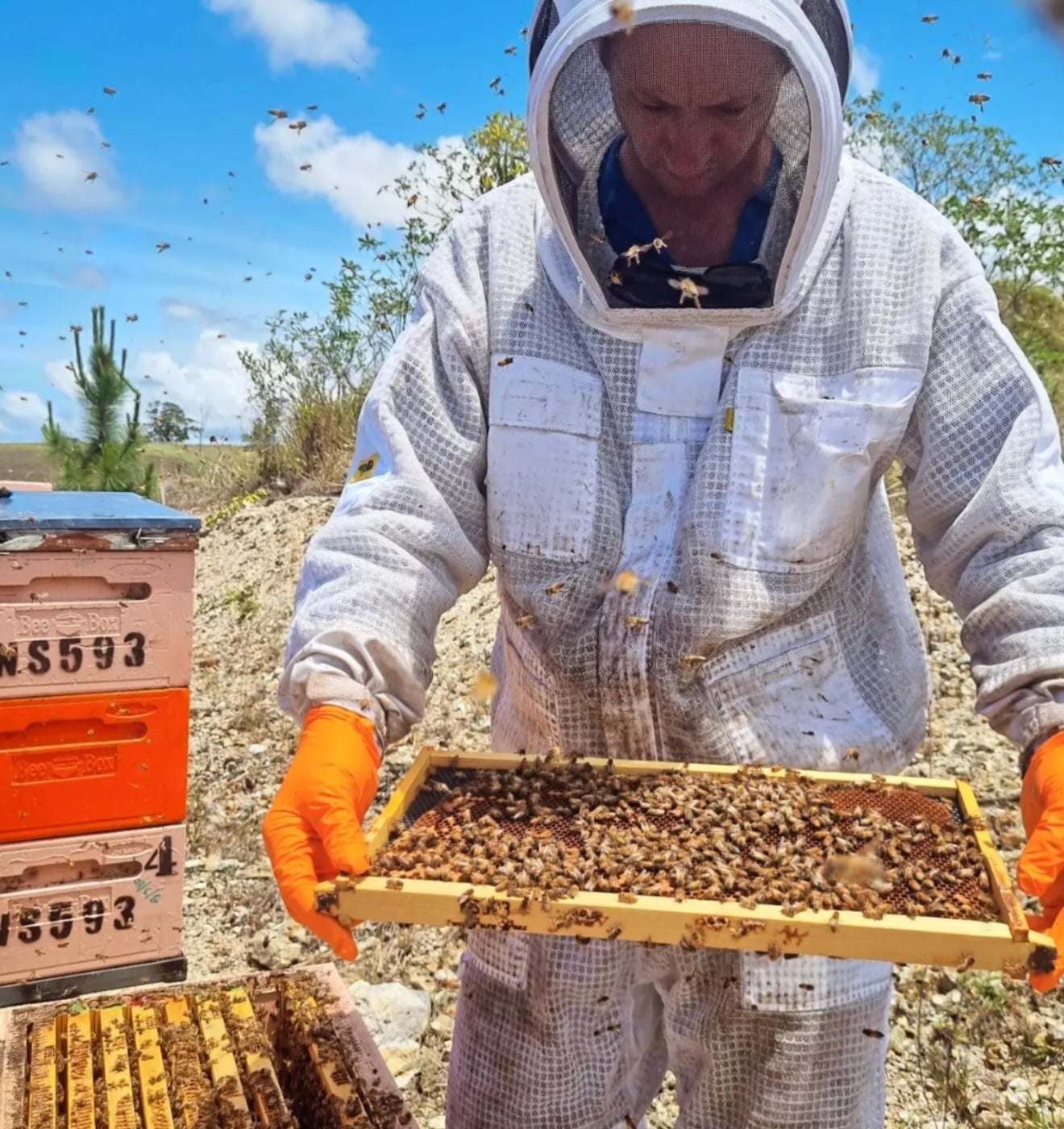
Kelvin Scandrett, owner of Two Busy Beez, said the tiny parasite had fundamentally changed the way he manages his 150 hives, forcing him to inspect colonies every five days in a bid to stay ahead of infestations.
He believes that intensive management has helped him avoid the devastating losses experienced by many others.
“A lot of beekeepers are struggling big time and have lost colonies,” Mr Scandrett said.
“A lot of the amateur beekeepers have lost hives and lost everything and haven’t come back.”
Mr Scandrett said there were both organic and synthetic treatments available that could successfully control the parasite, but using them effectively was labour-intensive and added significantly to the cost of producing honey.
“I feel like I have been fairly lucky with it and that I am on top of it,” he said.
“I am only a small beekeeper with 150 hives and I work fairly intensively in my hives and have been able to keep it at bay.
“Most beekeepers have to look in their hives every four to eight weeks whereas I am effectively in my hives every five days trying to manage the pest.”
His hives are spread across the Northern Rivers, from Crabbes Creek to Swan Bay, supplying about 15 local retailers as well as customers at the Ballina and Evans Head farmers markets.
Australia learning to live with varroa
Australia was the last inhabited continent free of the varroa destructor mite until it was detected at the Port of Newcastle in June 2022. Following an intensive eradication campaign costing more than $100 million, governments and industry agreed in late 2023 that eliminating the pest was no longer technically possible, shifting instead to a long-term management strategy.
The mite feeds on honey bees and spreads viruses that weaken colonies and can eventually cause hives to collapse if left untreated. Overseas it has long been regarded as the world’s most destructive honey bee parasite.
Mr Scandrett said Australian beekeepers were now facing the same reality.
“I would love to think there is a long-term solution but the rest of the world has been living with it for years. America has been living with it for 40 years,” he said.
The NSW Government has since rolled out training programs, biosecurity officers and practical support to help beekeepers adapt to the new management approach, while Agriculture Minister Tara Moriarty has said building industry resilience is now the priority as Australia learns to live with the pest.
Despite those efforts, the industry continues to face fresh challenges. Earlier this year, treatment-resistant populations of varroa mite were confirmed in parts of NSW and Queensland, prompting authorities to urge beekeepers to rotate chemical treatments and adopt integrated pest management practices.
Industry estimates suggest one in four NSW commercial beekeepers have left the industry since varroa was first detected.
A wider concern is the effect this may have on pollinating crops including almonds, apples, berries, avocados and canola, making the issue one of food security as well as honey production.
Honey remains unaffected
Despite the challenges facing beekeepers, Mr Scandrett said consumers could remain confident in the quality of locally produced honey.
“Varroa mite doesn’t affect honey in any way,” he said.
“Honey is an antibacterial and very stable product.”
Instead, he hopes people will continue supporting local producers as Australia’s beekeeping industry adapts to its new reality.