
One kingfish per boat: Fishers push back against proposed new limits
Share This Story, Choose Your Platform!
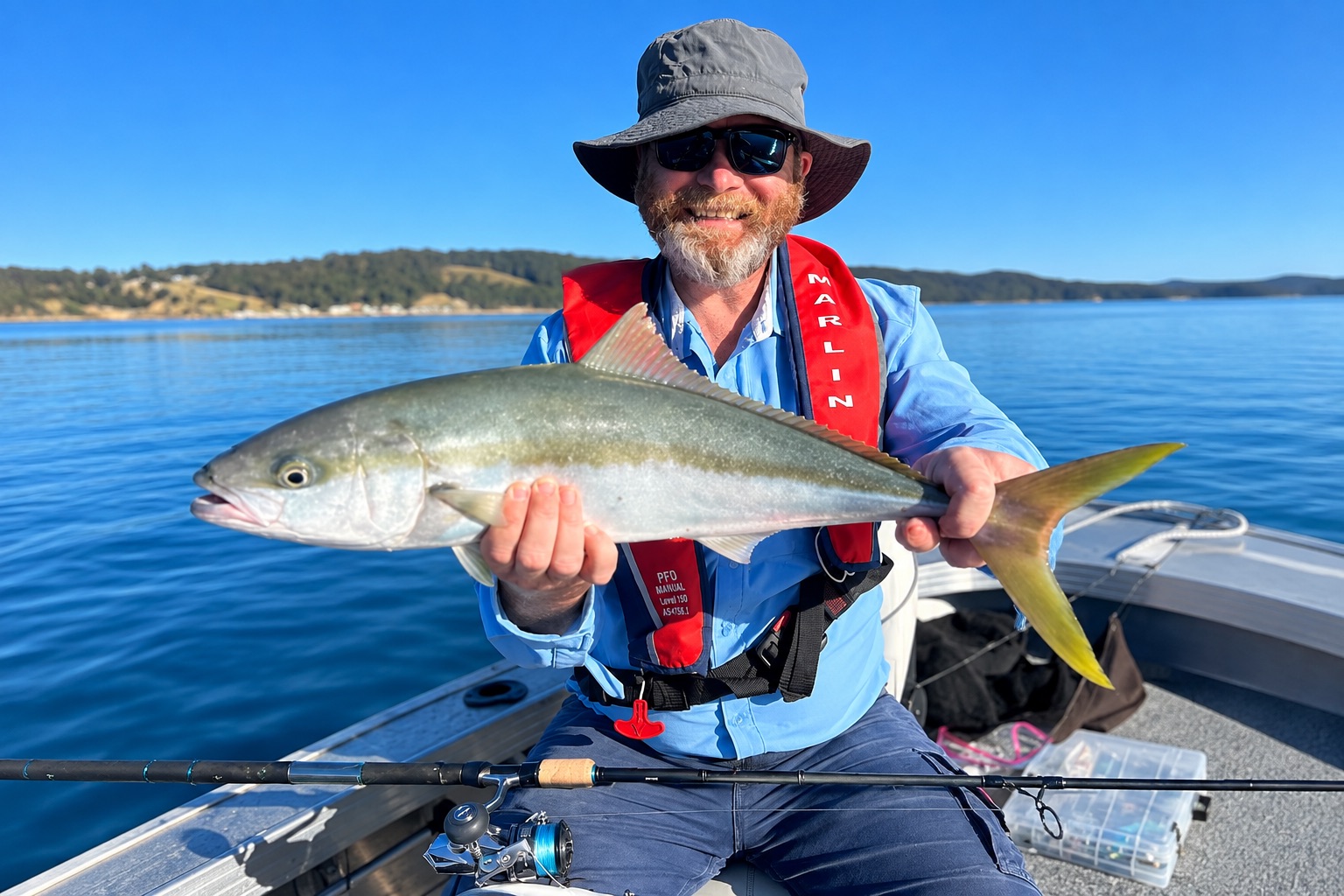
Recreational fishers could be restricted to just one kingfish per boat under controversial new rules that have prompted the NSW Government to extend public consultation.
The proposed changes would slash the Yellowtail Kingfish recreational bag limit from five fish to one, with a maximum of just one kingfish allowed on a boat regardless of how many people are fishing.
A catch-and-release-only period from November to January could also be introduced if further restrictions were needed to control catches.
Yellowtail Kingfish are regarded as one of Australia’s prized sport and table fish, targeted by both recreational and commercial fishers.
The NSW Department of Primary Industries describes the species as “iconic” and one of the most popular fish targeted in south-eastern Australia.
The recreational catch was estimated at about 129 tonnes in 2017-18, compared with a commercial catch of 91 tonnes.
The Department’s climate research also shows northern NSW waters have historically provided highly suitable conditions for kingfish at certain times of the year, particularly during spring.
Snapper are also facing tighter rules, with a proposed recreational bag and possession limit of three fish, including only one over 70cm.
Agriculture Minister Tara Moriarty today announced consultation on both proposals would be extended until February 15 next year following feedback from fishers and other stakeholders seeking more time.
The Government has also hit back at what it describes as “false information” circulating online about the science behind the proposed restrictions.
At the centre of the debate is a new assessment estimating the NSW Yellowtail Kingfish spawning biomass at just 5.5 per cent of unfished levels.
The Government says not enough smaller kingfish are surviving to breeding size and wants to cut the overall annual catch from about 250 tonnes to 120 tonnes.
It estimates that would allow biomass to recover to 20 per cent of unfished levels and return the stock to sustainable status in about nine years.
But the Australian Fishing Trade Association, which represents the recreational fishing tackle and boating industry, has challenged aspects of the process and called for more information supporting the proposed restrictions.
AFTA says it supports sustainable fisheries management but has questioned the assessment methodology and sought greater access to the underlying modelling, data and independent reviews.
The association submitted 127 questions to the Government and had called for the consultation period to be extended.
It has also pointed to previous government assessments that classified Yellowtail Kingfish as sustainable, arguing fishers need a clearer explanation of the change in the stock assessment.
The Government says the latest assessment uses an improved model incorporating biological and fishery data including age, size, growth and spawning information, with greater emphasis on the breeding population.
“We’ve examined the science, we’ve consulted the experts, we’ve spoken to experienced fishers and the answer is clear – the stocks of breeding Kingfish are far too low,” Ms Moriarty said.
She said tough measures were needed to rebuild stocks while avoiding a complete fishing ban.
Snapper are considered sustainable but remain below the Government’s long-term target.
The draft strategy aims to keep the total snapper catch at about 300 tonnes a year while rebuilding biomass to 30 per cent of unfished levels by 2035.
Submissions on both draft strategies will now remain open until February 15 2027.
(Photo credit: ABC)