

Councillor warns of “misunderstandings” driving backlash to rate rise
Share This Story, Choose Your Platform!
Calls for clarity as Special Rate Variation debate intensifies ahead of December vote
A Ballina Shire councillor has warned that community backlash to the proposed Special Rate Variation (SRV) is being fuelled by “misunderstandings” about how council finances actually work, urging residents to look beyond social media commentary.
Greens A-Ward councillor Erin Karsten delivered a pointed statement at last week’s Council meeting, saying she felt compelled to “put the facts on the record” after what she described as a wave of inaccurate claims circulating online and in emails to councillors.
“Quite frankly, a lot of what’s been said in the community is inaccurate and ill-informed,” she told the chamber.
“I want people listening to understand our financial position, and particularly our investments, because I sit on the audit, risk and improvement committee — and there are some key points that really matter.”
The proposed SRV, recommended by the committee, would increase rates by about 26 per cent over the next five years. Councillors are expected to vote on the matter at their final meeting for the year on December 11.
Mayor Sharon Cadwallader backed the explanation, telling the meeting: “That was a very good summary. It’s good that it’s on the public record now.”
“Strong investments are a sign of good management — not spare money”
Cr Karsten said a major point of confusion was the belief that council’s cash reserves represented surplus funds.
“When community members see a healthy bank balance, they go, ‘Oh — there’s money in the bank.’ But councils are expected to maintain strong liquidity and reserves for risk management, future renewals and disasters,” she said.
“After the floods and other natural events in recent years, maintaining those reserves is more important than ever.
“Cash reserves aren’t spare money — they’re mostly committed funds.”
She compared the reserves to a household’s long-term savings.
“It’s just like people who have money in an interest-earning account.
“Typically you have a plan for that money.
“It’s not just extra cash for everyday expenses. Council isn’t any different.”
Many funds legally restricted
Cr Karsten emphasised that most of the cash shown in council accounts is locked up by legislation.
“Externally restricted funds come from grants, developer contributions, water and sewer charges — and they can only be used for those specific purposes.
“That’s why certain projects, like the pump track, can happen even when people think they’re unnecessary.
“The funding for that could never be used for maintenance or asset renewal.”
She said the general fund — the only fund that pays for day-to-day services — is the one under pressure.
“Only a small fraction of our total cash holdings is truly unrestricted.
“Using that money for ongoing operations would quickly deplete our safety net and leave Council unable to respond to unexpected costs or disasters.”
Staff costs clarified
Responding to criticism about staffing levels, Cr Karsten said the figures were being misinterpreted.
“There have been comments about staff costs — but around 70 to 75 per cent of every major organisation in the world is staff.
“People do stuff. Council is a labour-based business,” she said.
“There are guys out there trimming trees, fixing roads, making sure your toilets flush. That’s what you’re paying for.”
Later in the meeting, fellow councillor Simon Kinny asked for clarity on the monthly payroll, prompting staff to estimate the figure at about $2.6 million per month — roughly $30 million a year.
Staff also noted Ballina’s workforce is around 20 per cent smaller than comparable councils.
IPART approval still required
If councillors vote in favour of the SRV in December as expected, the proposal will go to IPART for final approval.
Similar and larger applications from other regional councils have been approved in recent years.
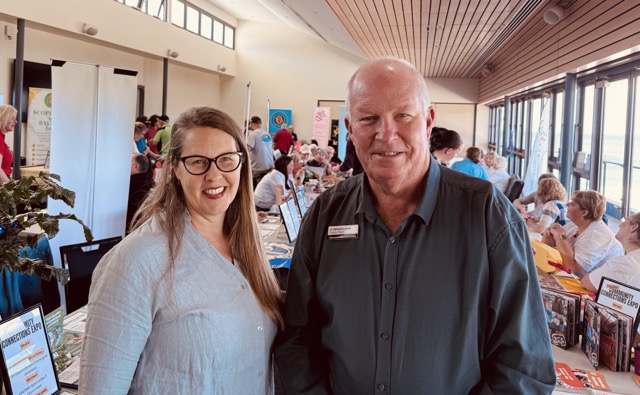
Main photo: Cr Erin Karsten pictured recently with Deputy Mayor Damian Loone
Related stories:
Share This Story, Choose Your Platform!
One Comment
Comments are closed.




In my view, “misunderstandings” aren’t very relevant, and Councillors defensive arguments don’t assist.
Council seems unable to understand that many of their ratepayers can’t afford an exorbitant rate rise!
They Can’t Afford It !