
Matilda on standby as deadly bird flu spreads across Australia
Share This Story, Choose Your Platform!
Australia’s only mobile wildlife hospital is on standby at Lennox Head as bird flu spreads rapidly across the country, with its next destination potentially decided within days.
Byron Bay Wildlife Hospital founder Dr Stephen Van Mil says Matilda, the organisation’s mobile veterinary hospital, has been asked to return to Canberra as the Federal Government steps up its response to highly pathogenic H5 avian influenza.
But it may not get there first.
Dr Van Mil told Ballina News Daily he had just received reports of a major bird mortality event in South Australia, raising the possibility Matilda could instead be deployed directly to an outbreak.
Mass bird deaths suspected of being linked to H5N1 have now been reported on South Australian islands, while dead penguins in Tasmania are also being tested.
“We could be heading to South Australia in two days’ time, or we could be heading to Tasmania or Victoria,” Dr Van Mil said.
Matilda is currently based at Lennox Head and is Australia’s only full-service mobile wildlife hospital capable of being deployed around the country.
The vehicle travelled to Canberra in March, when Dr Van Mil and his team met MPs, senators and ministers to argue for a national network of mobile wildlife hospitals.
Last week, he said, the organisation was asked whether Matilda could return to Parliament House.
The request has come as the H5 threat Dr Van Mil has warned about for years begins to unfold with alarming speed.
“Australia’s had five years to plan for highly pathogenic avian influenza,” he said.
“Until June, we were the only continent in the world where it hadn’t appeared, and it was only a matter of time — it was only a matter of where and when.
“And we know it’s not going to go away.”
Dr Van Mil said the virus had already caused catastrophic losses among wildlife overseas, including birds and marine mammals.
“Millions and millions and millions of birds globally have been wiped out in the last five years,” he said.
“The impact on our wildlife and ergo our environment is going to be significant.
“We can’t stick our heads in the sand and pretend it’s going to go away. It’s not.”
Call for Matildas across Australia
Dr Van Mil believes the unfolding outbreak strengthens the case for every Australian state and territory to have access to a mobile wildlife hospital.
Matilda allows veterinary teams and equipment to be taken directly to an emergency rather than transporting large numbers of sick animals to distant permanent hospitals.
Dr Van Mil said the concept had been discussed with senior politicians during Matilda’s March visit to Canberra and was a relatively modest investment compared with the potential environmental consequences.
“Every state and territory should have a Matilda,” he said.
“It’s not a silly concept, and it’s not that expensive. It’s not a huge investment on the government’s part at all.”
Dr Van Mil said Wildlife Recovery Australia was working with agencies including Wildlife Health Australia as the national response developed.
Locally, Byron Bay Wildlife Hospital has protocols in place for suspected H5 cases and has already tested birds showing concerning symptoms.
So far, all have been negative.
“We haven’t identified a positive case in this region yet,” Dr Van Mil said.

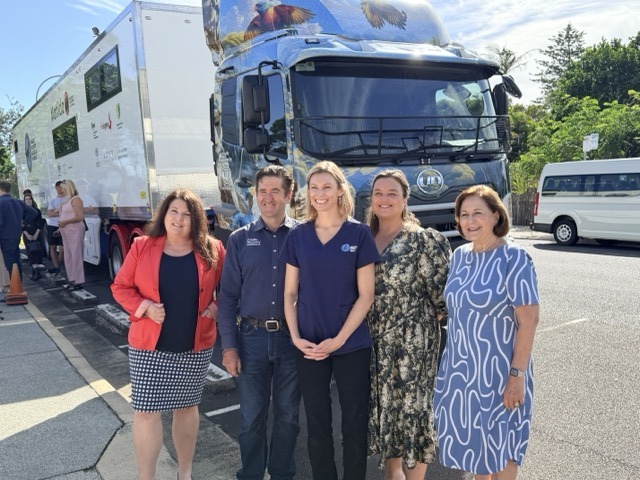
Dr Van Mil with Member for Richmond Justine Elliot during Matilda’s first visit to Canberra earlier this year.
Main Photo: Hospital staff join local politicians to farewell Matilda from Lennox Head on the mobile hospital’s first national trip on March 3
“We’ve had a lot of cases we’ve been suspicious [of]. We’ve tested everything, and nothing’s come back positive yet for H5N1.
“But that could happen tomorrow. It could happen next week.”
For the moment, the Lennox Head hospital remains well prepared and financially secure, continuing its normal seven-day-a-week operations.
But just a short distance away, the region’s other wildlife hospital is facing a very different challenge.
Wollongbar hospital fights for survival
Northern Rivers Wildlife Hospital at Wollongbar has issued an urgent appeal for funding, warning its future is at risk just as it too prepares for bird flu.
The community-owned, not-for-profit hospital says it treated more than 2,000 sick, injured and orphaned native animals during the past year, providing veterinary treatment free of charge.
Hospital manager Rachel Nolde said bird flu had not caused the financial crisis, but preparing for its arrival had exposed the pressure created by a lack of reliable ongoing funding.
“Preparation for the bird flu, looking ahead in order to actually help with bird flu, there’s no way we can do it with the current funding that we have,” she said.
“But it’s mostly the lack of ongoing funding.
“We’re working every year, every month to make the funding that’s needed to operate … it’s just not sustainable as it is.”
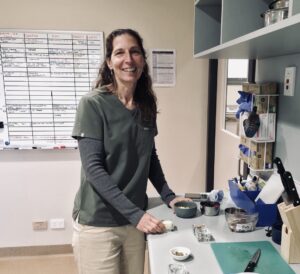
Rachel Nolde
The hospital has reduced staffing to one veterinarian and two veterinary nurses and will cut admission hours from Monday to 10am–3pm weekdays.
It will not accept new admissions on weekends, although staff must continue caring for animals already in the hospital.
The cuts have created a particular problem for its bird flu preparations.
Northern Rivers Wildlife Hospital has established an outdoor triage facility designed to prevent potentially infected birds entering the main hospital, with PPE, medication and containment equipment ready.
A separate air-conditioned and ventilated room is also being prepared for a longer-term response.
But Ms Nolde said having the facilities was one thing; finding enough staff to operate them while keeping the wildlife hospital functioning was another.
“We have the outdoor triage set up, but who’s manning it?” she said.
“It’s kind of like we can do that or run the hospital, but not both.
“Are you only helping bird flu victims, or are you only helping wildlife? Because there’s just not the capacity to do both at the same time.”
The timing is particularly difficult because spring traditionally brings a surge in injured and orphaned wildlife.
Ms Nolde said admissions had already more than doubled during recent sunny weather following weeks of cold and rain.
Northern Rivers Wildlife Hospital chair Madeleine Faught said the organisation was reducing operating costs and trying to establish a sustainable long-term funding model.
“Right now, that support is not enough, and without urgent funding, the future of our hospital is at risk,” she said.
“We cannot afford to lose our hospital.”
Dr Van Mil said Byron Bay Wildlife Hospital, which has operated since 2020, remained financially secure with no debt and multiple sources of income.
Asked about the long-term viability of having two wildlife hospitals in the region while funding was under pressure, he said Byron Bay Wildlife Hospital had already been servicing wildlife throughout the Northern Rivers before the second hospital opened.
“The wildlife of the entire Northern Rivers region have been fully serviced by Byron Bay Wildlife Hospital since September 2020,” he said.
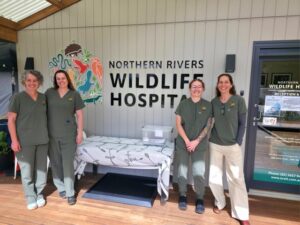
The reduced team at Northern Rivers Wildlife Hospital
“If another organisation decides that a second wildlife hospital is needed, well, that’s their judgement call.
“If it works, good on them.”
For both hospitals, however, the immediate concern is what happens when H5 reaches the Northern Rivers.
And Dr Van Mil believes that is now a question of when, rather than if.
“We are prepared,” he said.
“We haven’t identified a positive case in this region yet.
“That’s only a matter of time.”