

BOOMING BALLINA: Lennox closes in on Byron as Lismore plays catch-up
Share This Story, Choose Your Platform!
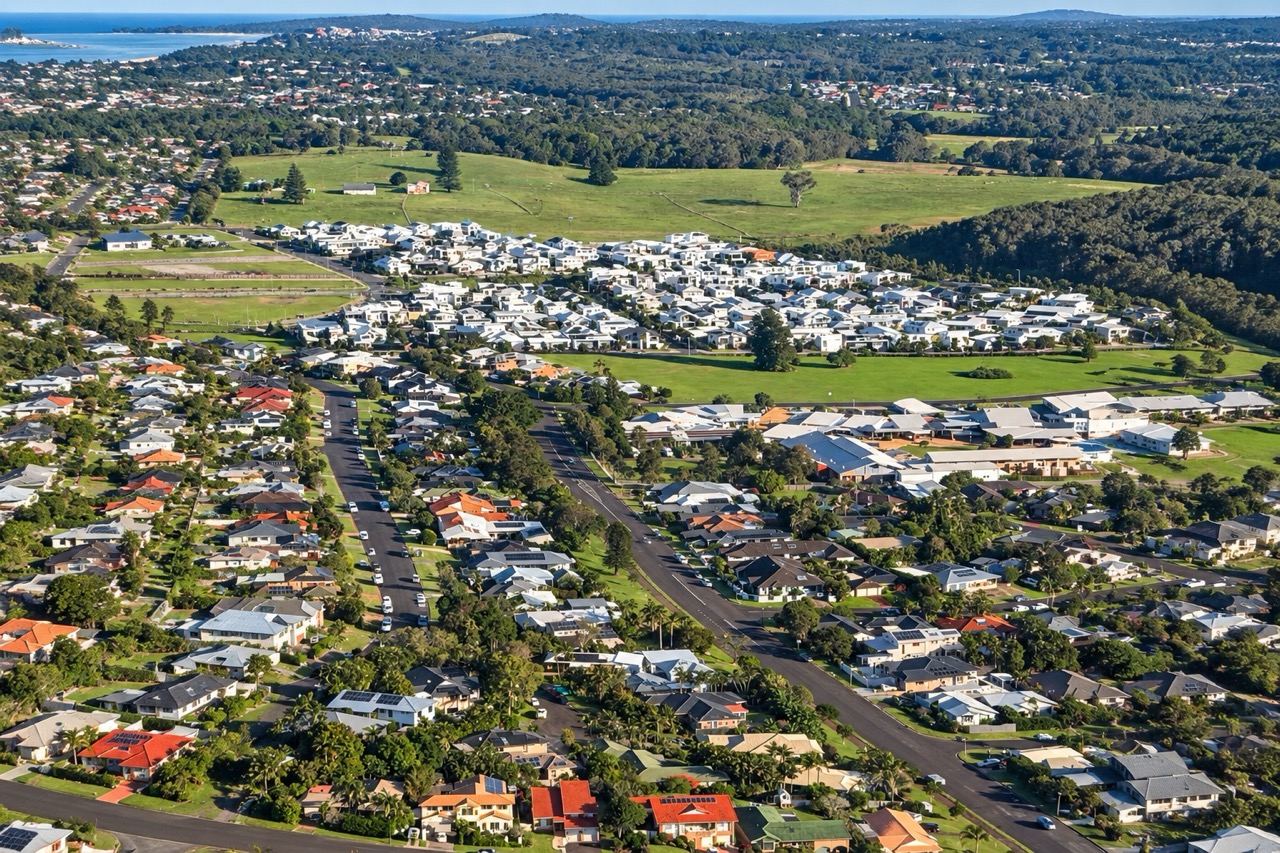
Ballina Shire is emerging as a North Coast population powerhouse, growing strongly while several neighbouring Northern Rivers centres have gone backwards.
Nowhere is the change more striking than Lennox Head and Skennars Head, which added 806 people in just three years to June 2025, the biggest increase across the Richmond-Tweed region.
The combined population reached 10,282, putting it within 1,200 people of neighbouring Byron Bay, with an estimated 11,482 residents.
Ballina and its surrounds also added more than 600 people over the three years.
But elsewhere in the Northern Rivers it was a very different story.
Lismore lost 1,228 residents over the same period, while populations also declined in Casino and Murwillumbah.
Perhaps not surprisingly, Lismore City Council this week backed an ambitious strategy aimed at getting its wider population growing again.
Its “Lismore 60,000” planning framework sets a target of growing the local government area to 60,000 people and beyond, opening a pathway for up to 10,000 new homes and creating 6,500 jobs.
But even if Lismore achieves that ambitious target, Ballina Shire is forecast to be bigger still.
Ballina is already home to about 51,000 people and, without the need for a similarly branded population target, is forecast to grow beyond 62,000 by 2046.
Byron Shire is also growing, but remains considerably smaller than Ballina Shire and is growing at a slower rate.
Byron Shire has a population of around 36,500, some 14,500 fewer people than Ballina. Mullumbimby was one of Byron’s stronger growth areas, adding more than 600 residents over the three years.
New analysis of the latest Australian Bureau of Statistics data by the Institute of Public Affairs reveals another striking feature of the population shift: around 80 per cent of the growth across the wider Richmond-Tweed region came from overseas migration.
The region added 6,073 residents between June 2022 and June 2025, with overseas migration accounting for the overwhelming majority of that increase.
Plateau population tops 10,000
Growth and development are not confined to Ballina’s coastline.
The shire’s other major population hub, the Alstonville-Wollongbar plateau, is also now home to about 10,000 people.
Ballina Council forecasts put Alstonville at 6,403 residents in 2026 and Wollongbar-McLeans Ridges at 3,620, giving the two areas a combined population of 10,023.
That puts the plateau communities collectively in the same population league as Casino and other well-known regional NSW centres such as Cowra and Forbes.
It also means Ballina Shire has two substantial population hubs outside central Ballina sitting around the 10,000 mark, one on the coast and another on the plateau.
And further growth is coming.
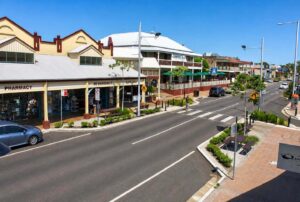
Ballina Shire’s growth is being felt across its major population centres, from booming Skennars Head (main photo) and Lennox Head on the coast to Alstonville (above) and Wollongbar on the plateau.
By 2046, council forecasts put the combined Alstonville and Wollongbar-McLeans Ridges population at more than 11,350.
Council says Cumbalum, Lennox Head and Skennars Head are expected to be its highest-growth areas, while greenfield land releases at Cumbalum, Kinvara, Lennox Head and Wollongbar will help accommodate thousands of additional residents.
Planning for a bigger Ballina
Ballina Council is also planning for the economic opportunities that come with a growing population.
Its Draft Economic Development and Visitor Economy Strategy 2026-2031 is now on public exhibition, setting out 31 actions aimed at supporting business, creating local jobs and strengthening Ballina Shire as a place to live, work, invest and visit.
The strategy is built around three areas: Business and Industry, Tourism and Experiences, and People and Place.
Mayor Sharon Cadwallader said council wanted to take a more proactive approach to attracting and supporting investment.
“We aspire to be a council that says ‘how can we help?’ rather than simply ‘here are the rules’,” she said.
“By partnering with business, streamlining processes where possible, and championing investment, Council can foster an environment where enterprise flourishes, employment grows and the prosperity of the Ballina Shire is shared by all.”
The draft strategy is open for community and business feedback through Ballina Council’s Your Say website.
Share This Story, Choose Your Platform!
One Comment
Comments are closed.

Bigger does not mean better.