
Four years on: Can the region rise above division to stop the next big flood?
Four years ago this week, the Richmond River system reached levels no living residents had seen before.
Mayor Sharon Cadwallader was giving a live television interview when the river overtopped its banks in Ballina.
“It was heartbreaking to watch it running through the main street,” she said.
Now the region finds itself at a crossroads faced with important policy choices that will shape the future of our region and how it’s impacted by recurring flood events.
This three-part special report marks four years since the 2022 floods, which peaked in Lismore on February 28 and hit Ballina hardest three days later.
With new CSIRO modelling now testing real mitigation options, the region faces a rare chance to reduce flood risk — if it can hold its nerve long enough to deliver works that prevent a repeat.
For the first time, a comprehensive, catchment-scale hydrodynamic model — commissioned following the 2022 disaster and funded through Commonwealth disaster mitigation allocations — allows policy-makers to test specific flood mitigation scenarios before committing public funds.
The modelling, led by Dr Jai Vaze of the CSIRO, spans more than 7,000 square kilometres of the Richmond River catchment.
It was initiated through federal funding negotiations in early 2022 and now forms the technical backbone of the Northern Rivers Resilience Initiative, overseen in partnership with the National Emergency Management Agency (NEMA) and the NSW Reconstruction Authority.
Flood mitigation advocate Graham Askey from the ‘Our Future Northern Rivers’ lobby group said the model marks a structural shift in how decisions can be made.
“For the first time, we can test combinations of interventions and measure the effect on peak flood heights,” he said.
“That’s fundamentally different to the reports we’ve had in the past.”
From recovery to mitigation
Australia’s disaster policy has historically prioritised recovery expenditure over mitigation.
The 2022 Northern Rivers disaster alone is estimated to have caused approximately $20 billion in direct and indirect economic losses, making it officially Australia’s costliest natural disaster on record.
In comparison, national mitigation funding has historically represented a small fraction of recovery spending.
The Disaster Ready Fund and NEMA allocations in recent years reflect a policy shift toward pre-disaster investment.
Federal Member for Page Kevin Hogan argues that mitigation funding is fiscally responsible.
“We can’t keep spending billions cleaning up disasters after they happen,” he said.
The CSIRO modelling was funded initially at approximately $10 million, later supplemented to expand laser mapping and catchment analysis.
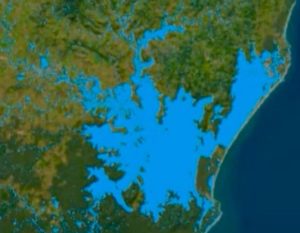
Image from the CSIRO Flood Model showing how far the waters spread on March 3 2022
It now enables scenario testing for both engineered and nature-based measures at scale.
Ballina’s economic exposure
While Lismore’s losses were nationally visible, Ballina’s exposure is distinct.
The town sits at the base of the catchment, where upstream decisions and flows converge.
Mayor Cadwallader said the flood exposed not only physical vulnerability, but economic fragility.
“Insurance premiums have become astronomical,” she said.
“People are choosing not to insure. That’s a serious risk.”
Even elevated homes built under Ballina’s pad-raising policy have experienced significant premium increases.
Insurance affordability has emerged as a secondary disaster risk.
The Insurance Council of Australia and the Productivity Commission have both previously argued that targeted mitigation investment can reduce long-term premium volatility.
“If we can get mitigation in place,” Mayor Cadwallader said, “insurance companies will have to respond.”
Consultation and governance
The consultation process over the past year has revealed tension between different mitigation philosophies.
Environmental advocates have pushed for greater emphasis on nature-based solutions.
Greens-aligned councillors at Ballina, Lismore and Rous County Council sought to remove certain engineering options from consideration.
Those motions were defeated.
At one CSIRO consultation session, a former Greens candidate was asked to leave after attending multiple forums and lobbying participants, highlighting concerns about process integrity.
Minister for Disaster Recovery Janelle Saffin has repeatedly framed the discussion within integrated flood management principles.
“It’s not either-or,” she said.
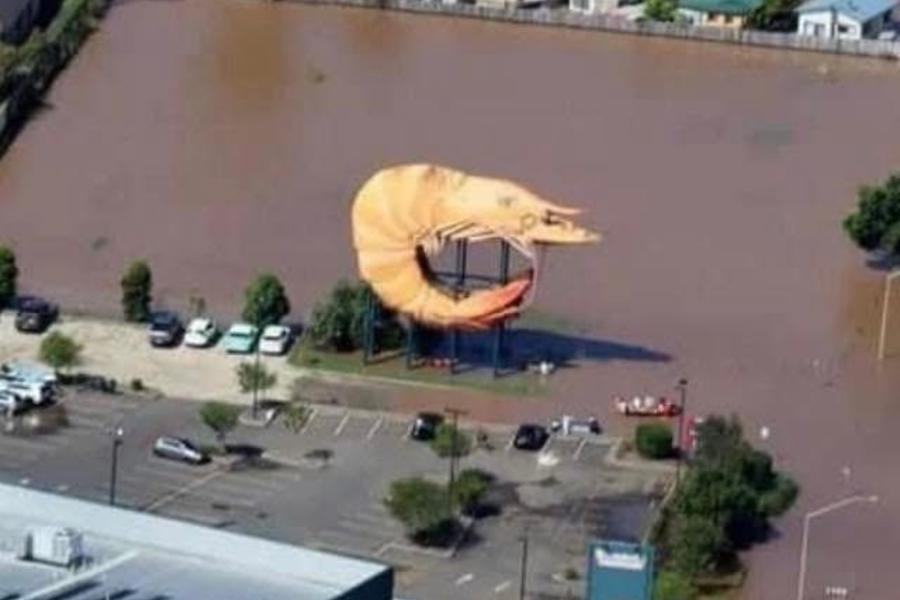
Grant St flooding on the edge of the CBD on March 2 2022
The modelling will ultimately test bundles of interventions rather than isolated projects.
The policy challenge lies not in identifying options, but in selecting, sequencing and funding them.
Tomorrow, in part two, we examine the policy case for nature-based flood mitigation and its documented limits within large-scale riverine systems.