
Matilda hits the road: Australia’s only mobile wildlife hospital farewells home on World Wildlife Day
Matilda the mobile wildlife hospital has farewelled Lennox Head on a national tour to treat injured animals and push politicians to do more to save endangered animals.
World Wildlife Day was symbolically chosen as the start of a journey expected to take in areas where animals are suffering from bushfires, as well as a stop at Parliament House in Canberra to wrangle politicians.
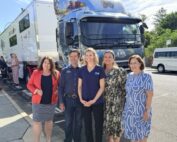
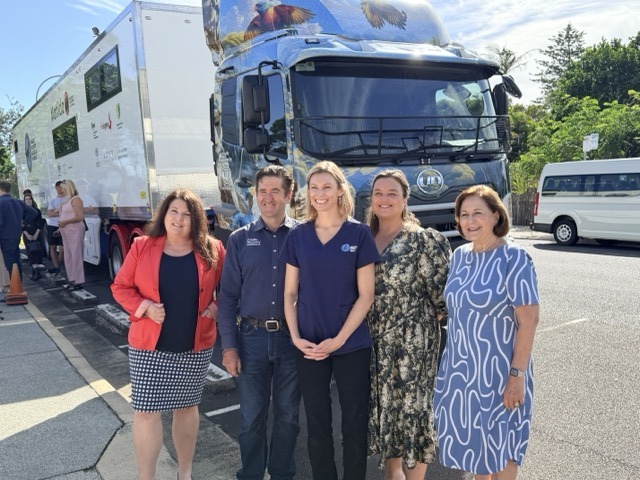
Local dignitaries joined hospital staff and supporters to wave off the big rig, with Ballina Shire Mayor Sharon Cadwallader saying the farewell was significant and symbolic.
“Today we’re not just farewelling a truck,” Cr Cadwallader said.
“We’re farewelling a vision, a purpose and a promise.”
Wildlife Recovery Australia Founder and CEO Dr Stephen Van Mil described Matilda as a national asset.
“She’s the only mobile wildlife hospital in this country, and she’s ready, willing and able to be deployed anywhere there’s a bushfire, flood event, disease outbreak or mass stranding.”
From local lifeline to national mission
Built in 2020, Matilda has treated more than 11,000 wildlife patients while based in Ballina and Byron shires.
For years, the van served as the region’s primary wildlife surgery, operating seven days a week.
That changed in August 2025, when the organisation purchased the Lennox Head Veterinary Clinic, now operating as the Byron Bay Wildlife Hospital.
With a permanent facility in place, the mobile hospital is free to travel.
“Up until last year we were effectively landlocked,” Dr Van Mil said.
“If we left, the service here would have been compromised. Now we can take Matilda on the road and showcase what’s possible.”
The tour will cover about 12,000 kilometres, including stops in Coffs Harbour, the Blue Mountains, Victoria, Tasmania, Kangaroo Island and Margaret River.
Dr Van Mil said the team expected to treat wildlife along the way, including animals still impacted by recent Victorian bushfires and high rates of road trauma in Tasmania.
The NRMA estimates up to 10 million native animals are killed on Australian roads each year.
“We’ve got one of the worst mammalian extinction rates in the world,” he said.
“Twenty per cent of the mammals present at colonisation are now extinct. It’s not a record to be proud of.”
Pushing for a national wildlife framework
A central aim of the tour is to advocate for a coordinated national wildlife care framework.
Dr Van Mil said wildlife treatment across Australia largely relies on volunteers and private veterinarians providing pro bono care.
“There is no dedicated legislation at state, territory or federal level that accounts for wildlife care in a coordinated way,” he said.
“We’ve worked alongside Wildlife Victoria, RSPCA Wildlife Queensland and WA Wildlife to develop a framework. Now we’re taking that to Canberra.”

A juvenile platypus being treated with oxygen therapy at the hospital recently – Matilda is expected to see a much wider range of native patients on her national tour.
He said recurrent funding, rather than one-off grants, was essential.
“At $20 million federally, it’s a drop in the ocean. We need structured, ongoing support.”
The organisation has also partnered with Southern Cross University to develop a new veterinary curriculum focused on wildlife medicine.
Chief Veterinary Officer Dr Bree Talbot said the tour would also strengthen partnerships with community wildlife groups nationwide.
“We’re really excited to get back into the field and work with species we don’t see in the Northern Rivers,” Dr Talbot said.
“We’ve already got a wombat case lined up in Lithgow. Every stop is about supporting local carers and using Matilda for what she was built for.”
Community pride and political backing
Mayor Cadwallader described Matilda as “hope on the move” and said regional communities had carried much of the burden for wildlife rescue during disasters.
“It’s time governments recognised that work with proper funding and support,” she said.
Ballina MP Tamara Smith said the tour would shine a national spotlight on the extinction crisis.
“We all know carers working with tawny frogmouths, echidnas or turtles affected by plastic,” Ms Smith said.
“This isn’t abstract. Without proper planning and funding, we will lose species that Australians and visitors from around the world value.”
Ready to deploy
Inside Matilda is a fully equipped veterinary hospital, including surgery, intensive care, X-ray, ultrasound and anaesthesia facilities.

Bob the driver prepares to board – Matilda’s striking new paint job is not to be missed.
Main photo: L to R: Tamara Smith MP, Dr Stephen Van Mil, Dr Bree Talbot and mayors Sarah Ndiaye and Sharon Cadwallader
Dr Van Mil said if another natural disaster occurred during the tour, the team would be prepared to respond.
“She can be deployed anywhere. That’s exactly what she was built for.”
Supported by sponsors including UD Trucks and a network of volunteer drivers, Matilda is expected to return to the Northern Rivers in April, though organisers say the schedule remains flexible due to strong interest from communities nationwide.
As the prime mover rolled out of Lennox Head, Dr Van Mil noted the symbolic timing.
“Dr Bree was born on World Wildlife Day,” he said as he presented her with a bouquet for her birthday.
“Today, she’s heading off on a mission to help protect it.”