
$980m flood recovery mess exposed by Auditor-General
Share This Story, Choose Your Platform!
A blistering NSW Auditor-General’s report has torn apart the state’s $980 million flood recovery response, finding key programs were badly planned, heavily delayed and failed to deliver.
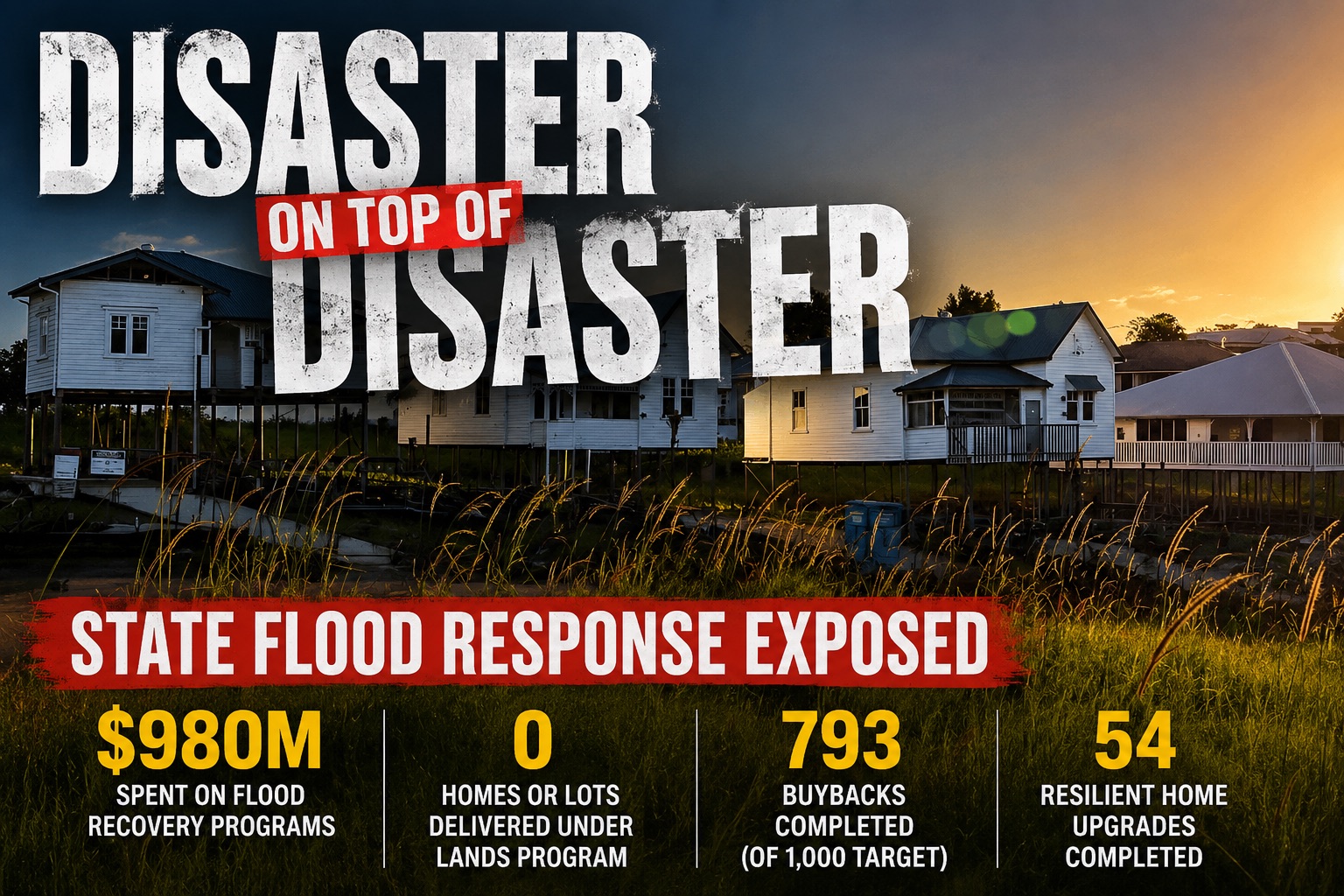
Four years on from the major disaster, the audit found the flagship Resilient Lands Program has still not delivered a single home or housing lot for displaced residents.
The damning report found key recovery programs were launched without proper business cases, cost-benefit analysis, detailed project plans or adequate risk management.
Many flood survivors across the Northern Rivers remain displaced, living in temporary accommodation, couch surfing or struggling through the worsening housing crisis as another winter sets in.
The Auditor-General concluded the Resilient Homes Program and Resilient Lands Program were “not effectively planned before implementation”, with failures leading to “significant delays” and increasing the risk promised outcomes would not be achieved.
The report examined the administration of the $880 million Resilient Homes Program and the $100 million Resilient Lands Program, which were established after the catastrophic 2022 floods that killed 13 people and damaged or destroyed almost 15,000 properties across the region.
The audit paints a picture of programs rushed out the door while agencies were still trying to work out how they would operate.
“Key elements of planning were not undertaken before the RHP and the RLP were rolled out,” the report stated.
The Auditor-General found detailed project plans, timelines, milestones and risk mitigation strategies were either incomplete or missing when the schemes began.
Formal governance arrangements for the Resilient Lands Program were not put in place until October 2024 — almost two years after the scheme started.
Millions spent as delays blow out
The report found the buyback scheme will also miss its original targets despite the ballooning budget.
After the Resilient Homes Program budget rose from $700 million to $880 million, authorities estimated they could support 1345 buybacks. That target has since been slashed to 1000.
As at March 31 this year, only 793 buybacks had been completed, while just 54 resilient housing upgrades had been delivered.
The audit said delays were compounded because major policy decisions had not been finalised before the schemes began operating.
That included procedures for relocating homes, gifting houses and dealing with large rural properties.
In one of the report’s harshest findings, the Auditor-General revealed the first resilient measures payment was not made until December 2023 — 21 months after the February 2022 flood disaster.
The report also criticised the lack of monitoring and accountability, finding the Reconstruction Authority did not develop outcome indicators for the Resilient Homes Program until May 2025, more than two years after the scheme began.
The audit warned important information may never have been collected.
“For example, information has not been collected about the housing outcomes of individuals whose homes have been bought back,” the report found.
No homes, no land, no timetable
The Resilient Lands Program received some of the strongest criticism.
The strategy, designed to fast-track new housing supply across the Northern Rivers, took more than a year to finalise after public exhibition.
The Auditor-General found timelines had repeatedly blown out, with some projects delayed by between six and 21 months.
Nine of the 12 major housing sites are now not expected to be completed until late 2026, 2027 or 2028.
Those sites include developments at Lennox Head, Goonellabah, Mullumbimby, Brunswick Heads, Murwillumbah and Casino.
Although the program aims to eventually deliver 4,382 homes or lots across the region, the Auditor-General warned it was still “not yet fulfilling its role of supporting flood-affected residents in the Northern Rivers.”
The report also noted Ballina Shire remained the only local government area where planned lot delivery would not exceed the number of homes destroyed or severely damaged in the floods.
Another major issue identified was the future use of bought-back land.
The audit found authorities failed to properly plan what would happen to land after homes were demolished.
The report said isolated vacant lots scattered through flood-prone communities remained a major challenge, with no clear plan for some parcels.
The Auditor-General made five recommendations, including accelerating land delivery, finalising plans for bought-back properties and ensuring future disaster recovery programs are properly planned before launch.
It also called for the state to develop disaster resilience programs before disasters strike, rather than scrambling to create them afterwards.