
Bee crisis threatens Australia’s food supply, Hogan warns
Share This Story, Choose Your Platform!
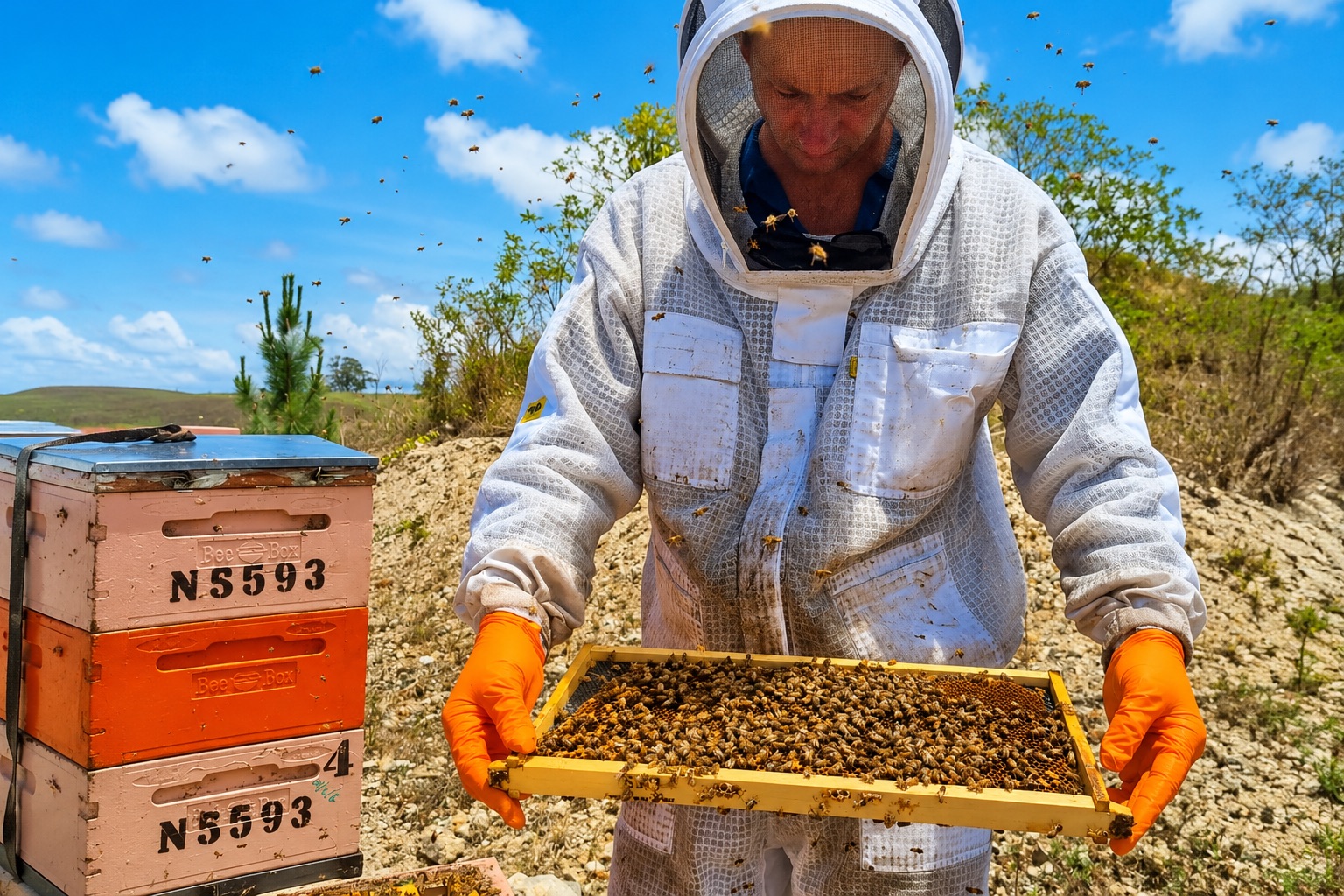
Page MP Kevin Hogan has taken the Northern Rivers beekeeping industry’s battle with varroa mite to Federal Parliament, warning the loss of commercial hives is becoming a threat to Australia’s food supply.
Mr Hogan told Parliament he had recently met commercial beekeepers from across the Northern Rivers and what he heard was “exceptionally concerning”.
He said the problem had moved well beyond honey production because commercial beekeepers provide pollination services essential to Australia’s fruit, vegetable, nut and seed industries.
“The most concerning message from beekeepers I’ve spoken to is that commercial operators are making decisions about whether they can remain in the industry,” Mr Hogan said.
“Every loss of an operator means a loss of hives, expertise, breeding programs, equipment and, more importantly, and I can’t stress this enough, commercial pollination capacity, meaning a threat to food availability.”
His intervention follows growing concern among Northern Rivers beekeepers about the cost and workload involved in managing the parasite.
Commercial beekeepers under pressure
Federal Government figures underline the scale of the problem.
The Australian Bureau of Agricultural and Resource Economics and Sciences’ 2026 snapshot of Australian agriculture says varroa has spread across eastern Australia and is threatening horticultural crop pollination.
It says varroa and drought were jointly attributed to a 17 per cent fall in registered commercial beekeepers in NSW during 2025, while the mite has also been associated with increasing costs for commercial pollination services.
Varroa is now established across large areas of eastern Australia after the destructive parasite was first detected near the Port of Newcastle in June 2022.
An intensive eradication campaign initially attempted to contain and eliminate the pest, but authorities abandoned eradication in 2023 after determining it was no longer technically feasible and moved to managing varroa as an established pest.
The Federal Agriculture Department says untreated European honey bee hives infested with varroa are likely to die within three to four years.
Overseas experience has also shown populations of unmanaged or feral European honey bees can fall by more than 90 per cent after varroa becomes established.
‘We need to understand what happened’
Mr Hogan used his speech during debate on changes to Australia’s biosecurity laws to call for greater scrutiny of how varroa became established despite years of preparation for its possible arrival.
“Varroa has exposed weaknesses in our biosecurity system,” he said.
“We need to understand what happened. We need to understand the weaknesses in our border protection, the surveillance, the detection and the responses – and what measures are being put in place to ensure those weaknesses are addressed.”
He said when the biosecurity chain failed, the cost did not disappear.
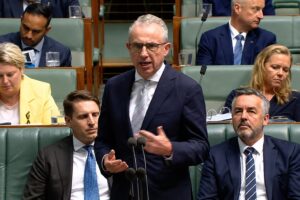
Kevin Hogan MP in the Federal Parliament
“It moves from the border to farmers, businesses and, ultimately, consumers,” he said.
Mr Hogan said Australian conditions also presented particular challenges in controlling the parasite.
The country’s warmer climate allows bee colonies to continue breeding for much of the year, while treatment resistance is emerging and Australia has limited practical experience managing an established varroa population.
“The industry believes the problem is moving faster than the regulatory response and the system needs to be capable of adapting to Australian conditions and to the evidence emerging from the field,” he said.
Call for easier access to treatments
Mr Hogan also called for a nationally consistent approach giving appropriately trained commercial beekeepers better access to practical and affordable treatments for their own hives.
He said existing treatment options, approvals and regulatory pathways could be complex, costly and slow to respond to emerging evidence.
The industry was not seeking deregulation or unrestricted chemical use, he said.
Instead, Mr Hogan called for consideration of a lawful and regulated “own-use” pathway for specified organic varroa treatments, backed by accreditation, training, safeguards and Australian field trials.
He said Australia needed a national framework bringing together border protection, surveillance, research, diagnostics, emergency response and industry expertise.
For Mr Hogan, the consequences of failing to protect commercial beekeeping extend well beyond the availability of locally produced honey.
“What we’re talking about here is the industry that provides pollination services to the whole of Australia’s agricultural sector — fruit, vegetables and a whole lot of other food products,” he said.
“We need to do better than we currently are.”