
Ballina’s historic mullet run hit by tough conditions
Share This Story, Choose Your Platform!
A combination of dirty river water, unfavourable weather and high fuel prices is impacting Ballina’s annual mullet run.
For generations, local fishing families have worked the Richmond River during the May and June mullet season, continuing a tradition that stretches back through European settlement and long before that through Indigenous fishing practices along the river.
Each year, thousands of mullet migrate downstream towards the open ocean.
Licensed fishermen are permitted to catch the fish, valued for their eggs or roe, using a simple method that has changed little over many generations.
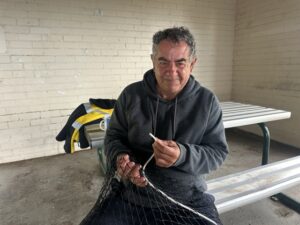
Tony Bobeldyk
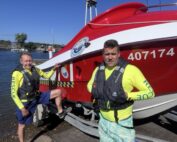
In Ballina, a local team begins its day at 5.30am, with a spotter stationed on Missingham Bridge watching for signs of mullet on the move.
Ideally, west or south-westerly winds trigger the fish to head downstream.
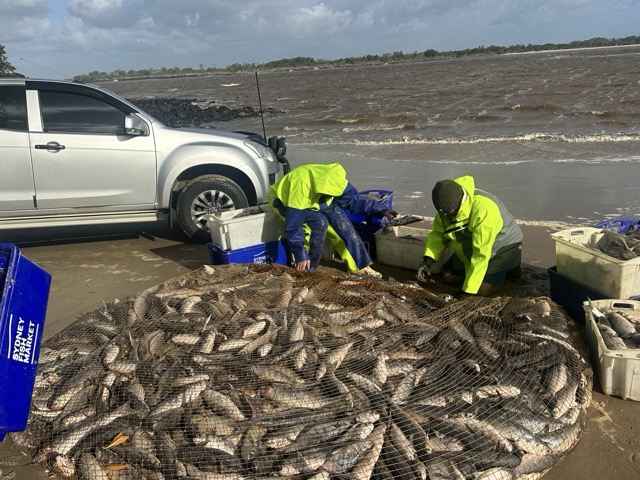
Yesterday, conditions were finally favourable, with each “shot” reaping nets full of fish and resulting in a 20-tonne catch.
67-year-old Tony Bobeldyk, a fourth-generation mullet fisherman and Ballina’s only licence holder, is hoping the season will still end well.
“We got our first haul on May 7, which was 7.5 tonnes, but it wasn’t until two weeks later that we managed to land 24 tonnes,” he said.
“It’s been pretty sad at first and now we’ve got rain, so we don’t know what’s going to happen after this, but we know there’s still fish to come.”
The team still uses a traditional process involving row boats to quietly set nets, known as “socks”, so they do not scare the fish as they move downstream.
The daily ritual, beginning before dawn each morning, regularly attracts attention from curious onlookers at Gawandii Beach, along with occasional criticism from opponents of commercial fishing.
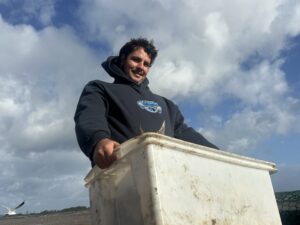
Cameron Bobledyk
“Every day we get greenies who complain about what we’re doing here, but in reality we only catch a portion of the mullet,” Tony said.
“Yesterday we saw at least 200 tonnes of fish head out to sea, so there’s plenty to go around.”
The mullet are taken to the Ballina Fishermen’s Co-operative before being transported to buyers in Chinderah and Brisbane, where the roe is processed mainly for export.
The best price for female fish is about $7 a kilo, while lower-grade fish can fetch as little as $2 a kilo.
Tony’s 22-year-old son Cameron is keen to follow in his father’s footsteps and help keep the fourth-generation family profession alive.
But there is constant work behind the scenes to keep the operation going.
Team member Glenn Patrick spends hours repairing damaged nets and preparing equipment for the next run.
As well as licence fees, operators are also charged quotas based on previous seasons’ tonnage.
The worst season Tony can remember delivered just 16 tonnes. The best reached 140 tonnes.
So far this year, the team has netted 72 tonnes, with the season expected to continue until early July.
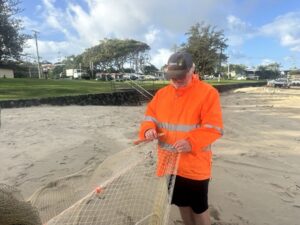
Glenn Patrick repairs the nets ahead of the next haul
One thing, Tony says, is certain.
“It’s a waiting game and you never know what tomorrow will bring.”
Despite the challenges, he remains passionate about the local industry and has welcomed regulations requiring restaurants to identify the source of seafood on their menus from July 1.
“It’s a good thing for the industry,” he said.
“If we live in Australia, let’s eat the Australian product.”