

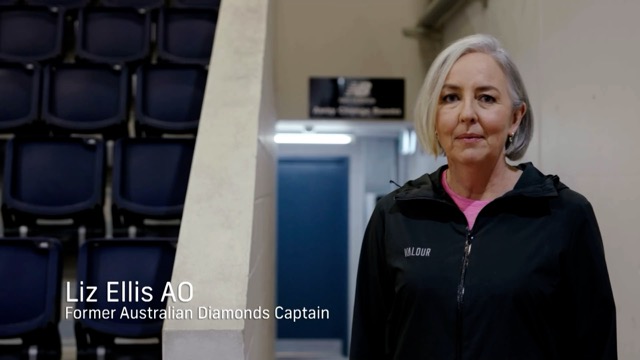
Liz Ellis fronts campaign highlighting women’s asthma risks
Share This Story, Choose Your Platform!
Ballina Shire resident and netball legend Liz Ellis is the face of the new national She Needs to Breathe campaign highlighting the often-overlooked link between female hormones and asthma.
Ms Ellis, who represented Australia for 15 seasons and is widely regarded as one of the sport’s greatest players, was diagnosed with asthma as a toddler.
She said she was surprised to learn that hormonal changes could have a significant impact on asthma symptoms.
“When Asthma Australia contacted me, I was blown away by the fact that despite living with asthma my whole life, I’d never really understood that there was a link between hormones and asthma,” Ms Ellis said.
Research shows women’s asthma can change during puberty, pregnancy, perimenopause and menopause, as well as during different stages of the menstrual cycle.
“My passion and work is about empowering women and girls, and it’s a no-brainer to empower women and girls to talk to their doctors about this aspect of their health,” Ms Ellis said.
She said many Australian women neglected their own health while juggling work and family responsibilities.
‘Take a moment to breathe’
“My message is to take a moment to breathe. That’s why I loved this campaign, She Needs to Breathe. It’s literal as well as figurative.
“Literally, you need to breathe as well as you can.
“That means you need to take a breath and prioritise your own health. That can be difficult if you’re going through menopause and caring for children and older parents – the sandwich generation – but you must prioritise your own health.
“See your doctor and take a moment to say, ‘Can we talk about my asthma?'”
Asthma Australia chief executive officer Kate Miranda said she was grateful netball’s greatest defender was now helping defend women’s health.
Asthma is a women’s issue
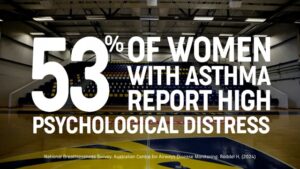
“Asthma is a women’s issue,” Ms Miranda said.
“Asthma is more common in boys before the age of 15, but the dynamic reverses during puberty.
“Women make up 61 per cent of all adult asthma cases and are disproportionately affected by the severity of the condition.
“Estrogen and progesterone play an important role in regulating airway inflammation and mucus production, so fluctuations in hormones can affect asthma symptoms.”
Women are also disproportionately affected by severe asthma outcomes.
Women are twice as likely to be hospitalised because of asthma as men, and twice as many women die from the condition each year. In 2024, 322 Australian women died from asthma, compared with 156 men.
Ms Miranda said the connection between hormones and asthma was often overlooked by both patients and health professionals.
She said many women also placed their own health at the bottom of the priority list.
“Due to life, work and childcare responsibilities, women put their health last. They try to push through, ignore the changes and ignore that their asthma is getting worse,” she said.
“But they don’t actually go and visit their GP and have a review.
“We’re saying to women: don’t ignore it. If your asthma changes during key life stages such as pregnancy, puberty, perimenopause or menopause, take it seriously and see your doctor.”
Women who notice changes in their asthma during major life stages or at particular times of the month are encouraged to track their symptoms, review their asthma action plan and speak with their GP about whether their treatment needs adjusting.
Resources and information are available through Asthma Australia’s She Needs to Breathe campaign website.

Netball legend Liz Ellis in action during her illustrious playing career. The Ballina Shire resident is now helping raise awareness about the impact of hormones on asthma.