

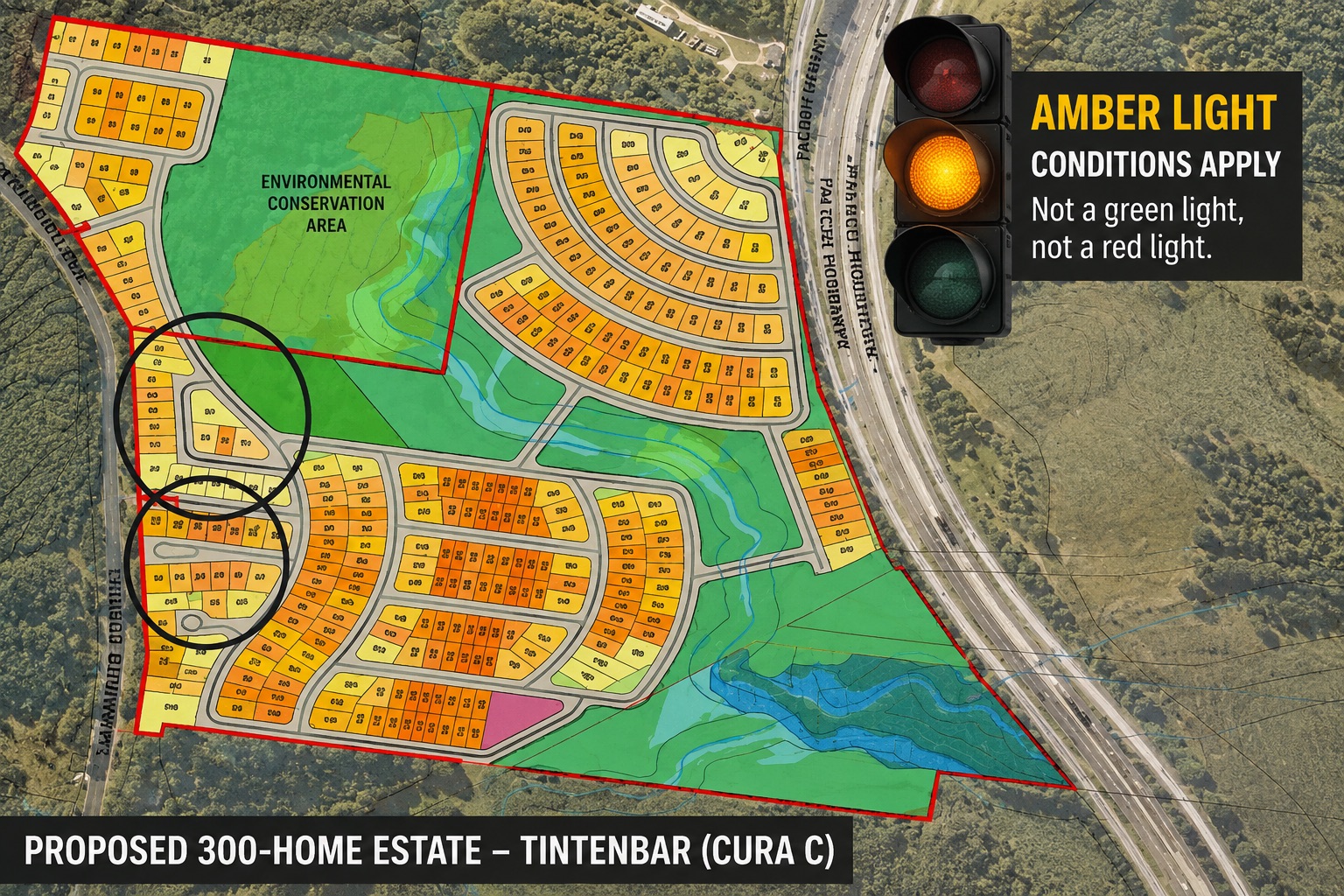
Not a green light: Panel puts conditions on 300-home Tintenbar estate
Share This Story, Choose Your Platform!
A proposed 300-home estate at Tintenbar has been given an amber light by a state planning panel, with developers ordered to answer a long list of infrastructure, environmental and community concerns before the project can move forward.
In a decision likely to be welcomed by Ballina Shire Council, the Northern Regional Planning Panel adopted many of the same concerns councillors raised about water, sewer and community infrastructure — and the risk of ratepayers being left carrying the cost.
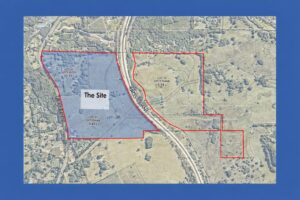
The decision relates to a proposal for approximately 300 homes on land at 962 and 1026 Tamarind Drive, Tintenbar, within the CURA C Strategic Urban Growth Area.
Council’s message appears to have landed
The matter reached the Northern Regional Planning Panel after Ballina Shire Council failed to determine the proposal within the statutory 115-day timeframe.
Councillors later debated the proposal and voted to send a strong message that the rezoning should not proceed in its current form.
At the centre of that debate was infrastructure — and who pays for it.
Council planning staff argued the site was outside the logical sequence of development, with neighbouring growth areas at Cumbalum and Kinvara intended to be developed first.
Councillors were concerned that approving CURA C ahead of schedule could force council to bring forward major water and sewer works, potentially exposing ratepayers to costs that may not be fully recovered from developer contributions.
Acting committee chair Phil Meehan summed up the concern.
“We must … safeguard our community against potentially very large costs,” he said.
Long list of hurdles
Rather than endorsing the proposal, the panel has directed the developer to undertake substantial further work before the project can progress.
Among the requirements are:
- A detailed Infrastructure Delivery Plan
- A Social Impact Assessment
- A Visual Impact Assessment
- An updated Bushfire Assessment
- Further environmental investigations
- Consultation with Rous County Council on water servicing
- Consultation with environmental agencies
- A site-specific Development Control Plan
- Updated zoning and lot size controls
- Negotiation of a Voluntary Planning Agreement with council.
The Infrastructure Delivery Plan must explain how water and wastewater services would be delivered, who pays for key infrastructure, how development would be staged and whether the proposal is economically viable.
The panel also wants detailed examination of visual impacts, including earthworks and any future noise attenuation infrastructure.
That issue may prove significant given the proposed estate sits between the old Pacific Highway and the M1 motorway.
Proposal survives — but faces major work
The panel found the proposal had strategic merit because CURA C remains identified as a Strategic Urban Growth Area and because increasing housing supply remains a priority across New South Wales.
However, it stopped well short of endorsing the project.
“The Panel does not endorse or support the RFI proposal package in its current form,” the determination states.
Further work is required on affordable housing, bushfire risk, social impacts, environmental issues, visual impacts and future planning controls.
The panel also encouraged Wentworth Properties to negotiate a Voluntary Planning Agreement with council covering affordable housing, open space and community infrastructure.
Whether that agreement can ultimately be reached remains to be seen.
Local representatives sidelined
The decision was also unusual because several local representatives were unable to participate in the panel’s deliberations.
Mayor Sharon Cadwallader and Deputy Mayor Damian Loone had recused themselves from council’s April committee debate because they expected to sit on the Northern Regional Planning Panel.
However, the determination reveals Mayor Cadwallader, Cr Loone and councillors Simon Kinny and Michelle Bailey were ultimately unable to participate because of their previous involvement in council discussions relating to CURA C.
The panel also lost its regular chair.
Northern Regional Planning Panel Chair Dianne Leeson withdrew because of prior communications with Ballina Shire Council that created a perceived conflict of interest.
The matter was ultimately determined unanimously by acting chair Stephen O’Connor, David Ryan and Michael Wright.
What happens next?
The developer now has two weeks to confirm it will revise the proposal in line with the panel’s recommendations.
If it agrees, it then has up to three months to submit a revised proposal and supporting studies.
For now, the project remains alive.
But before any rezoning can occur, developers will need to clear a substantial list of planning, infrastructure, environmental and community hurdles — many of them the same concerns Ballina councillors raised months ago.
Earlier Story: ‘Mini’ Ballina council votes ‘no’ to 300-home estate
Share This Story, Choose Your Platform!
One Comment
Comments are closed.


What a joke. Stop BUILDING.