
Ballina seabird rescuers adopt strict protocols as bird flu reaches Australia
Share This Story, Choose Your Platform!
Ballina-based Australian Seabird and Turtle Rescue has introduced strict new biosecurity measures as Australia braces for the possible spread of the deadly H5N1 bird flu virus.
The organisation is already treating every seabird rescue as a potential risk, with volunteers now wearing full personal protective equipment during some rescues.
On Friday, Australian Seabird and Turtle Rescue transported an injured Northern giant petrel from Coffs Harbour to Lennox Head for treatment at the Byron Bay Wildlife Hospital.
The bird had suffered a puncture wound to its wing and had ingested plastic but displayed no flu-like symptoms.
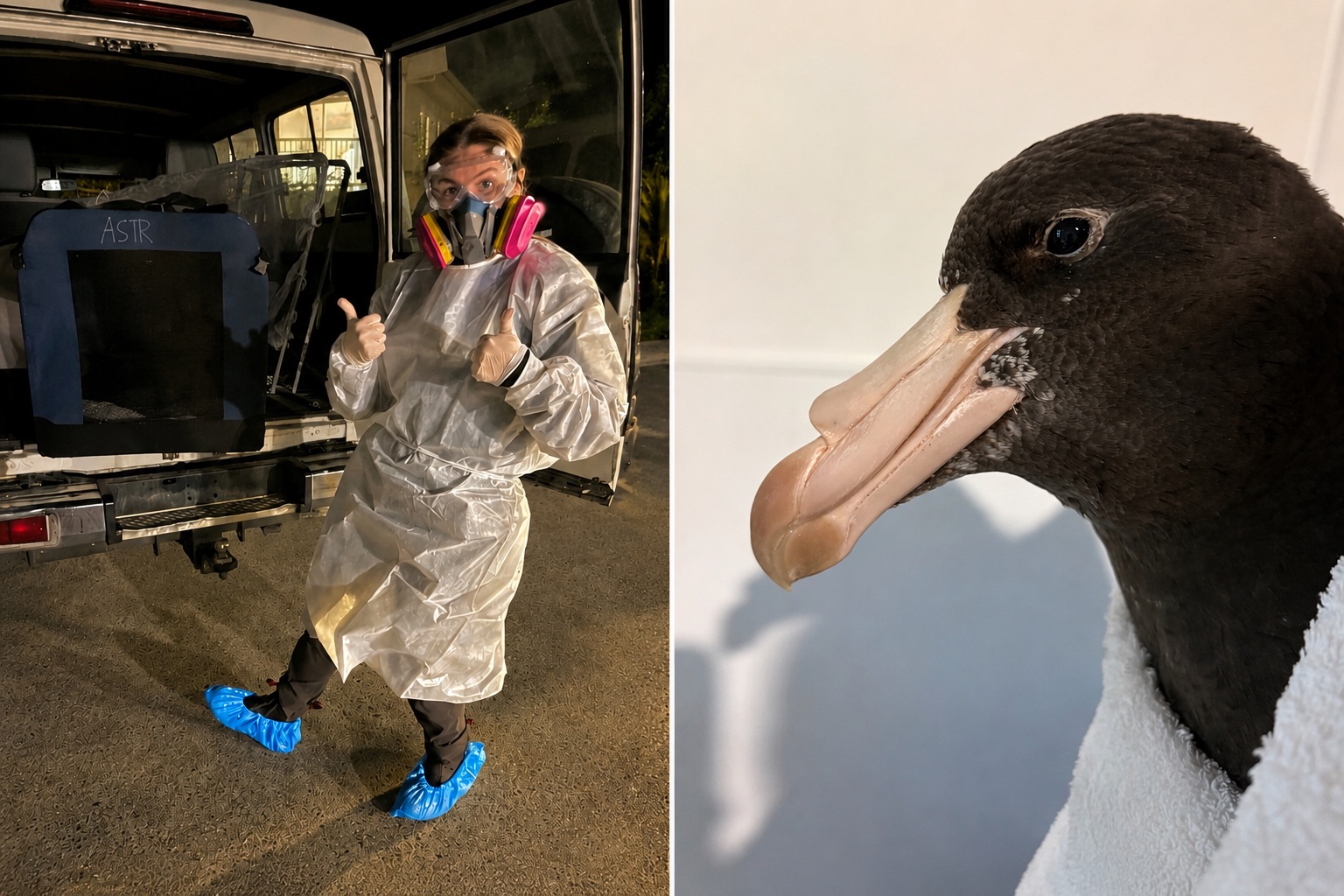
It died overnight. As a precaution, samples were sent to a state laboratory for testing for H5N1, with results expected tonight. The veterinary nurse who transferred the petrel wore full personal protective equipment (pictured above).
Australian Seabird and Turtle Rescue spokeswoman Phoebe Taylor said the wildlife sector had been preparing for the arrival of H5N1 for years.
Over the weekend, two birds that had flown from sub-Antarctic islands to mainland Australia tested positive to the lethal virus in Western Australia.
“Now that it’s actually on our shores, we are liaising regularly with government agencies, including the Department of Primary Industries, to establish what we can and can’t do,” she said.
“And we’re talking to other wildlife hospitals about their protocols.”
Essential advice if you suspect bird flu
Ms Taylor said it was vital for members of the public to follow three steps if they suspected bird flu in wildlife, particularly along the coastline:
- Avoid touching or approaching sick or dead birds or other animals. Marine mammals such as seals can become infected, while dogs and cats may also be susceptible.
- Record the time, date and location, and take photos or video if it is safe to do so.
- Report suspected cases immediately to the Emergency Animal Disease Hotline on 1800 675 888. The hotline should also be contacted if multiple bird deaths are observed.
Some bird rescues suspended
To prevent further transmission, Australian Seabird and Turtle Rescue will not rescue sick birds showing symptoms consistent with bird flu. Instead, volunteers will notify the Emergency Animal Disease Hotline so specialist teams can investigate.
Ms Taylor said volunteers would continue responding to incidents such as fishing hook and line entanglements, but would now wear human-grade personal protective equipment to protect themselves and reduce transmission risks.
The organisation rescues about 55 animals entangled in fishing line each year.
“We have 15 full PPE suits in the truck at the moment, but can prepare more if this blows up,” she said.
Wildlife carers fear devastating impact
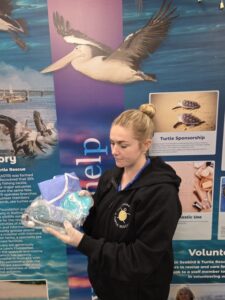
Phoebe Taylor from Australian Seabird Rescue getting ready for an indefinite future working in PPE gear.
Main image (insert) a Northern Giant Petrel – it was a dead bird of the same species found at Lennox Head last Friday now being tested for bird flu as a precaution.
The H5N1 virus poses a threat to more than 100 native species, including birds, land mammals and marine mammals such as seals and the Tasmanian devil.
Ms Taylor said she feared for endangered Northern Rivers species including the pied oystercatcher and beach stone-curlew.
Australian Seabird and Turtle Rescue is backing calls from conservation groups for the Federal Government to immediately invest $200 million in wildlife protection to help mitigate the combined threats posed by the virus, habitat loss, pest species and pollution.
Species considered at risk include black swans, wood ducks, Pacific black ducks, sea eagles, large owls, wedge-tailed eagles and sea lions.
There are also concerns the virus could spread from seabirds to waterbirds such as ducks and geese, and then to commercial poultry operations.
Poultry producer Ingham’s has already locked down its Western Australian operations.
In the United States, more than 100 million chickens have been culled due to H5N1 outbreaks, contributing to a sharp rise in egg prices.
With bird flu now detected in Western Australia, wildlife experts say an outbreak among native species elsewhere in Australia is likely.
Government response
NSW Agriculture Minister Tara Moriarty said the state government would continue working with Western Australia and national authorities to contain the virus.
“The NSW Government will work with our colleagues in Western Australia and provide support where we can to ensure we are doing everything possible to contain the virus,” she said.
“NSW has been preparing across government and industry for several years for an H5 avian influenza incursion.
“We are urging the community to report any unusual signs of illness or deaths of multiple birds, especially on the coastline, so we can detect any incursion quickly.”
NSW Chief Veterinary Officer Jo Coombe said eradication or containment of H5 bird flu in wildlife was unlikely if the virus became established in wild populations.
“Our focus, if it were to become established, would be to minimise the risk of onward transmission to commercial poultry, protect human health, minimise environmental impacts where possible, and ensure stakeholders are kept informed,” Dr Coombe said.
“Australia has a National Management Agreement in place, which establishes arrangements for responding to H5 bird flu in wildlife should it become established.”